Harry Collins: The Brilliant yet Controversial British Sociologist of Science Who Redefined Scientific Knowledge
A Powerful Journey of Insight, Debate, and Influence in the Sociology of Science—Where Genius Meets Criticism in Modern Academia

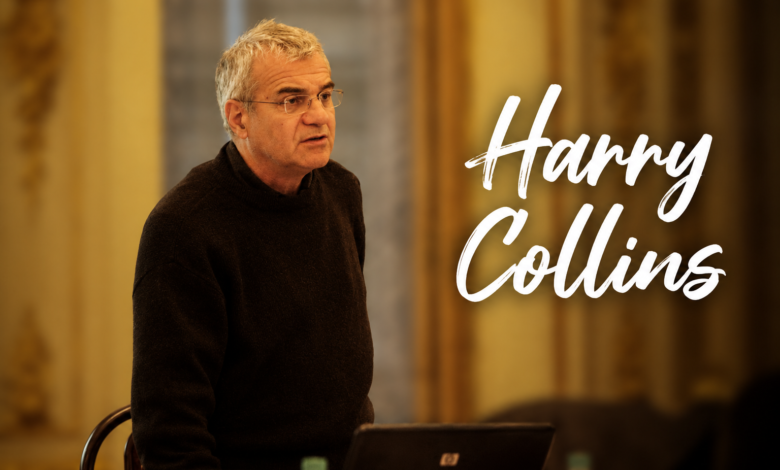
Harry Collins is widely recognized as a leading British sociologist of science who transformed the way people understand scientific knowledge, expertise, and truth. His work challenges the traditional belief that science is purely objective, arguing instead that social factors play a major role in shaping scientific outcomes. This idea has made him both highly respected and sometimes controversial in academic circles.
At the same time, Collins has been praised for introducing groundbreaking concepts such as interactional expertise and for deeply analyzing scientific controversies like gravitational waves. However, his ideas have also faced criticism from those who believe science should remain strictly objective and free from social interpretation. This balance of praise and debate makes his academic journey both powerful and thought-provoking.
Quick Bio
| Detail | Information |
| Full Name | Harry Maurice Collins |
| Date of Birth | 13 June 1943 |
| Age | 82 years (as of 2026) |
| Birth Place | United Kingdom |
| Nationality | British |
| Ethnicity | White British |
| Profession | Sociologist of Science |
| Known As | British sociologist of science |
| Famous For | Sociology of Scientific Knowledge (SSK), Interactional Expertise |
| Academic Association | Cardiff University |
| Key Contribution | Bath School approach in science studies |
| Field of Study | Sociology, Philosophy of Science, Science and Technology Studies |
| Career Focus | Understanding how science works in real-world practice rather than theory |
| Major Idea | Science is socially influenced and shaped by human interaction |
Early Life and Background
Childhood and Early Influences
Harry Collins was born in the United Kingdom in 1943 during a time of global uncertainty. Growing up in post-war Britain influenced his curiosity about how societies rebuild knowledge systems and trust. This environment later shaped his academic interest in how science develops through human interaction.
His early life experiences helped him understand that knowledge is not only built in laboratories but also in communities, institutions, and social networks. This idea became central to his later academic work.
Academic Foundation
Collins pursued education in sociology and social sciences, focusing early on how knowledge is created and shared. His academic path led him to study the relationship between science and society.
He developed a strong interest in how scientific facts are debated, validated, and sometimes disputed. This foundation helped him become one of the most influential thinkers in the field of science studies.
Start of Career and Academic Rise
Beginning of Professional Journey
Harry Collins began his academic career in the 1970s when sociology of science was still developing as a discipline. He joined the University of Bath, where he became a key figure in building the Bath School of Sociology of Scientific Knowledge.
This period marked the beginning of his major research into scientific practices, especially how scientists interpret experiments differently even when using the same data.
Growth as a British Sociologist of Science
As a British sociologist of science, Collins became known for challenging traditional scientific beliefs. He argued that scientific knowledge is not purely objective but is shaped by human interpretation and social agreement.
His ideas were both influential and debated, placing him at the center of major academic discussions about the nature of science.
Major Theories and Contributions
Sociology of Scientific Knowledge (SSK)
Collins is one of the founders of SSK, a field that studies how social factors influence scientific knowledge. He argued that scientific facts are not simply discovered but are also constructed through human interaction.
This theory changed how researchers view science, shifting attention from pure objectivity to social influence in scientific work.
Interactional Expertise
One of Collins’ most important contributions is the concept of interactional expertise. This idea suggests that a person can understand a scientific field deeply without actually practicing it.
This means communication and social learning can create meaningful expertise, even without hands-on experience.
Scientific Controversies and Gravitational Waves
Collins studied long scientific debates, especially around gravitational waves. He showed that scientific acceptance is often a slow process influenced by disagreement, interpretation, and collaboration.
His work demonstrated that science is not always straightforward but often involves negotiation and social consensus.
Career Overview and Academic Influence
Teaching and Research Career
Harry Collins spent many years teaching and researching at Cardiff University. He directed the Centre for the Study of Knowledge, Expertise and Science, where he continued developing his theories on science and society.
His academic work influenced students, researchers, and policymakers across the world.
Global Academic Impact
As a British sociologist of science, Collins became internationally respected. His research was used in universities and institutions worldwide to better understand science, technology, and expertise.
He also contributed to discussions on artificial intelligence and questioned whether machines can fully replace human judgment.
Books and Intellectual Contributions
Major Publications
Collins has written several influential books that shaped modern sociology of science. These works explore how science functions in real life rather than in theory.
His writing style is analytical yet accessible, making complex ideas understandable to broader audiences.
Key Ideas in His Books
His books focus on themes such as:
- Scientific uncertainty
- Role of society in science
- Limits of artificial intelligence
- Nature of expertise
These themes continue to influence modern academic debates.
Personal Life and Identity
Personal Background
Harry Collins is known for maintaining a private personal life. Public academic sources mainly focus on his professional achievements rather than personal relationships.
There is no widely confirmed public information about his family life, which reflects his academic-focused lifestyle.
Cultural and Social Identity
He is British by nationality and works primarily within the British academic system. His accent and communication style reflect standard British English, commonly used in academic environments.
His identity is strongly tied to his role as a researcher and thinker in sociology.
Net Worth, Income, and Professional Standing
Financial Overview
Harry Collins’ net worth is not publicly disclosed. As an academic, his income is based on university salary, research grants, and book royalties.
Unlike business figures, his financial profile is modest and academic in nature.
Source of Income
His income sources include:
- University salary from academic positions
- Research funding for scientific studies
- Book publications and academic writing
- Guest lectures and academic conferences
Legacy and Global Recognition
Academic Legacy
Harry Collins’ legacy lies in reshaping how people understand science. He showed that science is not only about experiments but also about communication, interpretation, and trust.
His work continues to influence sociology, philosophy, and science policy worldwide.
Long-Term Influence
His ideas remain relevant in modern debates about:
- Artificial intelligence
- Scientific decision-making
- Public understanding of science
He is widely regarded as one of the most influential British sociologists of science of the modern era.
Conclusion
Harry Collins stands as a powerful intellectual figure whose work continues to challenge traditional views of science. His research highlights both the strength and limitations of scientific knowledge, showing that human interaction plays a major role in shaping truth.
While his ideas are widely respected, they also invite debate, making him a unique and influential thinker in sociology. His legacy continues to inspire new generations of researchers who seek to understand the complex relationship between science and society.
Frequently Asked Questions (FAQ)
Q1: Who is Harry Collins?
Harry Collins is a British sociologist of science known for studying how scientific knowledge is socially constructed.
Q2: What is Harry Collins famous for?
He is famous for Sociology of Scientific Knowledge (SSK) and the concept of interactional expertise.
Q3: What is his nationality?
He is British.
Q4: What does he study?
He studies science, society, expertise, and how scientific knowledge is created.
Q5: Is Harry Collins still active?
Yes, he remains academically active and continues contributing to research discussions.
Q6: What is interactional expertise?
It is the ability to understand a field deeply through communication without practical experience.
Q7: What is his main contribution to science studies?
He showed that science is influenced by social processes, not just objective facts.
Q8: Does Harry Collins have business ventures?
No, he works in academia and research only.